
Step-by-Step Website Optimization for SEO

A website that is well-designed yet fails to attract traffic from Google usually has an issue in one of three areas: the search engine crawler cannot read it efficiently, the content does not match user intent, or the site fails to send signals that it can be trusted. SEO optimization is the process of improving a website so that it is visible in relevant searches (according to Search Engine Land) while remaining user-friendly - the full name of this process, Search Engine Optimization, accurately captures its essence. It is an element of online marketing (digital marketing) and website management, and together with paid online promotion campaigns, it forms SEM: Search Engine Marketing encompasses paid advertising (PPC) and organic efforts (SEO). Search engine optimization covers website positioning, online stores, local SEO, and international SEO, and it can also be carried out specifically for the Bing search engine. In practice, it consists of two groups of activities: working on the site code and structure, and working on the site content. These are complemented by off-site factors, primarily link building, which means acquiring valuable external links from other domains. In practice, this builds brand reputation and a backlink profile at the same time, which in the eyes of the search engine translates into trust and traffic from potential customers - yet hundreds of thousands of websites in Poland still fail to pass even a basic technical audit.
International SEO operates under somewhat different rules than website optimization targeted solely at the domestic market: each language version of a site requires its own URLs and hreflang tags, which tell the search engine which version to show a user from a given country - without them, different language versions begin to compete with one another like ordinary duplicates.
Order matters. First, you organize what the crawler sees: crawling and indexing, page loading speed, responsiveness, and URL architecture. Then comes aligning the content, keyword selection, headings, metadata, and internal linking. The starting point is an SEO audit, which reveals what is actually blocking the website's growth before you start changing anything. Since most of this game is played out in Google Search - holding over 95% of the Polish search engine market - its Google Search Essentials guidelines remain the technical foundation, covering technical requirements, spam policies, and best practices that SEO professionals apply every day. Google's recommendations must be monitored continuously, and the entire website optimization process should be treated as an ongoing journey, not a one-time implementation. Google's search algorithms, user behavior, and the way answers are presented - including in AI-driven search - change to such an extent that modern algorithms quickly render implementations from a few years ago obsolete. Below, you will find the subsequent stages of comprehensive website optimization, leading from higher search engine rankings to real conversions.
How to Combine Code, Content, and Artificial Intelligence?
Effective website optimization consists of three stages: technical code fundamentals, content semantics, and readiness for AI-generated answers. Holistic SEO integrates them with UX, security, and content quality, rather than treating each area in isolation. Such an SEO strategy works regardless of the size of the website, because each of the three stages can be broken down into concrete, actionable steps.
Stage 1: SEO Audit and Streamlining Technical Fundamentals
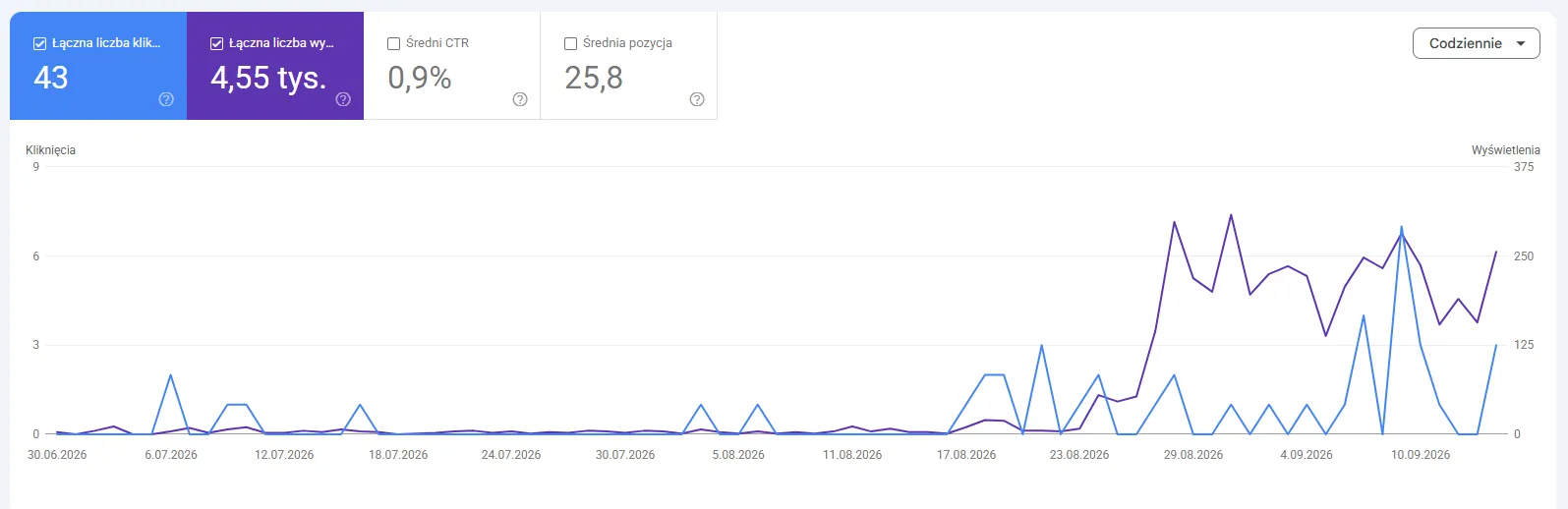
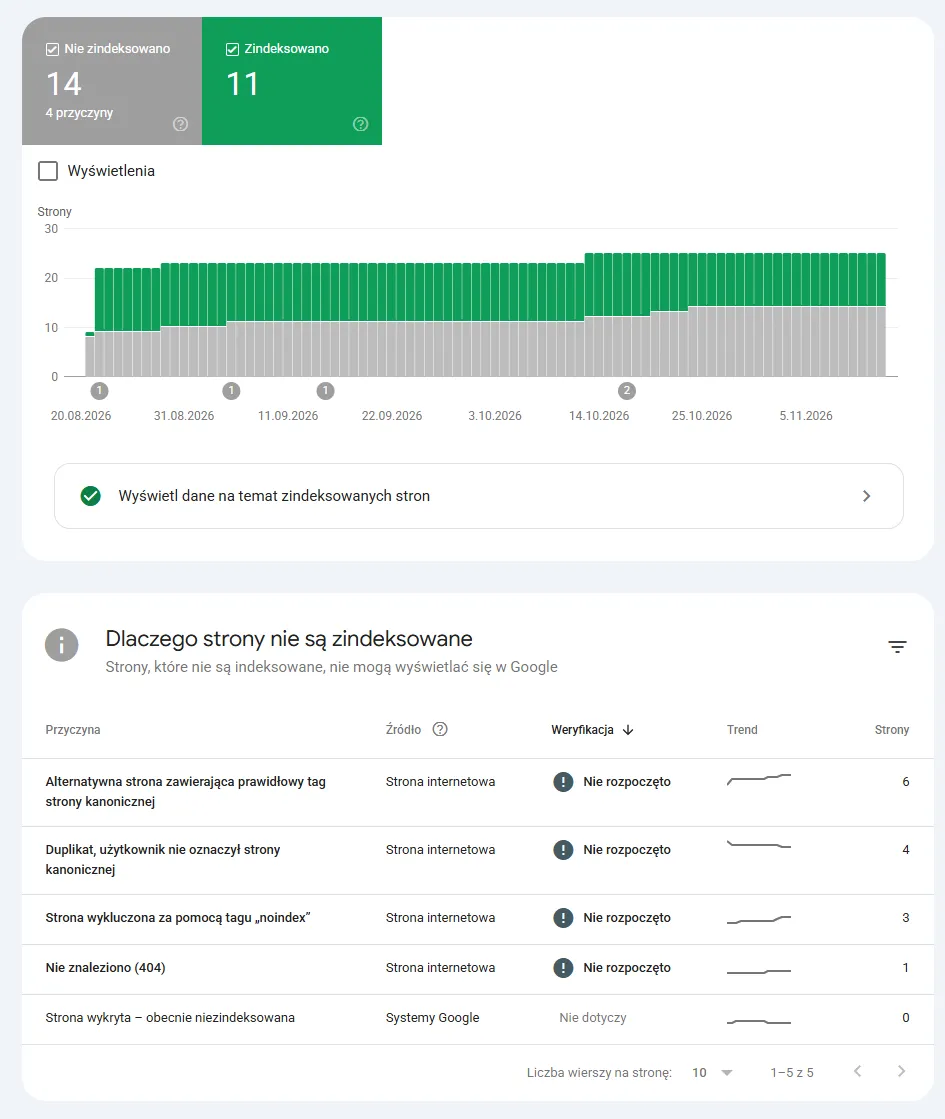
An SEO audit is the starting point for all on-site work. It detects errors in code and content while protecting the site against algorithmic penalties for violating spam policies in Google Search Essentials, such as artificial link manipulation or keyword stuffing. The scope and timeline of the audit depend on the size and technical condition of the website. A properly conducted SEO audit also shows whether the site is properly visible in Google Search, whether Google is indexing pages as intended, whether there are accidental duplicates in the Google index, and whether individual subpages are competing against one another for the same keywords. Understanding how Google Search works on a technical level also helps you diagnose more quickly what on your website needs improvement first.
- In Search Console, check the indexing status of subpages, clicks, impressions, and CTR in Google search results.
- Measure Core Web Vitals: LCP, INP (which replaced FID), and CLS.
- Verify traffic in Google Analytics.
Stage 2: HTML Semantics and Content Structure
Only with a clean technical foundation is it time to align content with user intent. The <title> element helps Google generate the search result title, although the search engine may rewrite it. The meta description influences the click-through decision, but it is not a direct ranking factor. Therefore, organize your H1-H3 headings, descriptive URLs, and internal linking, which helps crawlers discover pages and their relationships. An online store requires a different category architecture than a service business - tailoring the website to the business type can be just as crucial as the site structure itself, because a specific service offering page looks different from a product page in an e-commerce shop. These principles are outlined in e-commerce SEO, while local businesses additionally rely on signals from local SEO.
Stage 3: Preparing the Website for AI-Generated Answers
SEO is evolving toward AI SEO - optimizing for brand visibility across artificial intelligence engines. However, Google does not require a separate "AI SEO," special files, or structured data for a page to appear in AI Overviews and AI Mode. The same Google Search Essentials guidelines apply: helpful, reliable content created for people, an approach known as Helpful Content. Structured data makes it easier to understand the content, but it does not guarantee rich results. Concise answers beneath headings and visible citations help, while tools like SEMSTORM reveal keywords and competitors. Every search engine algorithm, whether classic or generative, evaluates similar quality signals today, so effective SEO in this space relies on the very same foundation: useful content, rather than tacking on artificial markup for AI.
This sequence distinguishes sustainable White Hat SEO from risky off-site link manipulation.
Technical Website Optimization and Indexing in Google
The proper configuration of indexing and URLs determines whether crawlers will index key pages under the mobile-first indexing standard. This is the core of technical SEO, as an error at this level invalidates even the best content. That is why technical optimization always precedes content work - code errors block even the best-written pages from users and search engine bots.
The robots.txt File, XML Sitemap, and Canonical Tags
- The robots.txt file and XML sitemap: robots.txt specifies crawler access permissions for server resources, while an XML sitemap provides Google Search Console with an up-to-date list of URLs and their modification dates. A single incorrect Disallow rule can cut off an entire section. On large websites, robots.txt also helps preserve crawl budget by excluding low-value areas.
- A canonical tag points to the primary URL, consolidates link equity, and mitigates duplicate content.
- The noindex, follow directive excludes low-value pages or duplicates from the index while allowing the crawler to follow links. Do not block such a page in robots.txt, or the crawler will not be able to read the directive.
Under mobile-first indexing, the mobile version serves as the sole basis for ranking evaluation. It must have identical metadata, canonical tags, structured data, and links as desktop. The simplest way to ensure this is through responsive web design.
Clear URL Structure and HTTPS Security
When choosing a domain, opt for a short, memorable name associated with your industry, a country-code extension like .pl, and register it for several years. In subpage URLs, use lowercase letters, numbers, and hyphens to separate words. A descriptive URL is good practice, but stuffing it with keywords is not a ranking requirement. Handle permanent structure changes with a 301 redirect. Unify the www and non-www domain versions the same way, for example, using a rule in the .htaccess file. The website must run exclusively on HTTPS, and http variants should lead to the destination URL via a single 301 redirect. A logical arrangement of pages within the site structure also makes it easier for search engine bots to reach each of them quickly.
Technical Checklist Before Launching a New Page
- A unique
<title>, not duplicated across other pages. - The canonical tag points to the correct URL.
- No accidental noindex tags in the code or HTTP headers.
- Internal links are
<a href>elements, not standalone JavaScript events. - The URL is clean, and legacy URLs have a 301 redirect.
- The robots.txt file does not block the page or its resources.
- The mobile version includes the same content, metadata, and structured data.
- The URL is in the XML sitemap and submitted for indexing.
- No broken links (404 errors) or redirect chains - every internal link points straight to the destination URL without unnecessary hops through multiple 301 redirects, and the server does not return 5xx errors.
Repeat this audit after every major update, as Google's guidelines and requirements continue to evolve. Regular reviews also let you quickly catch technical errors before you notice users quickly leaving the site without finding what they were looking for - among millions of websites, it is precisely these details that give you an edge.
How to Improve Core Web Vitals and Page Speed?
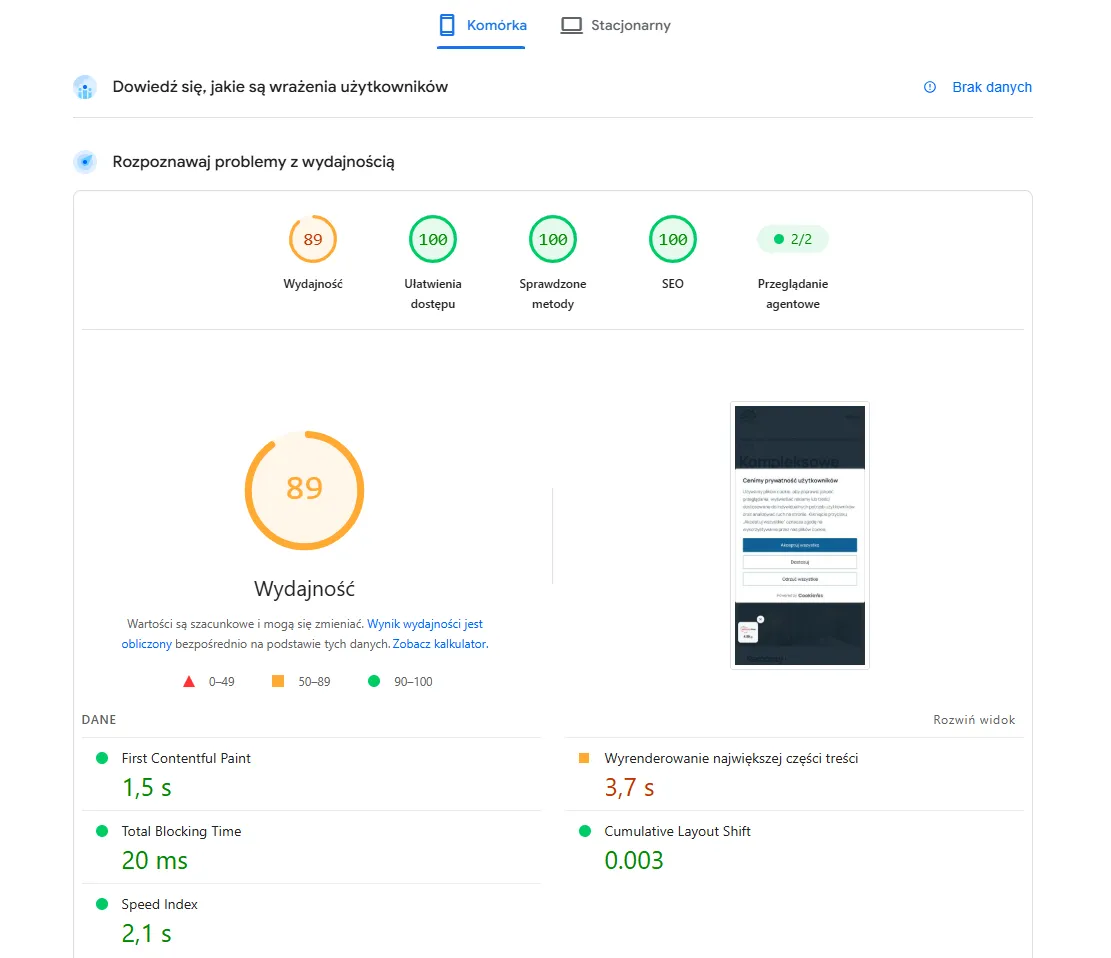
To meet Google's requirements, a page must achieve an LCP below 2.5 s, an INP below 200 ms, and a CLS below 0.1, evaluated based on real-user data. These three metrics make up Core Web Vitals, the standard for assessing page experience considered in rankings. LCP measures the render time of the largest element visible on load, INP measures interface responsiveness to clicks and taps, and CLS measures layout shifts during loading. INP replaced FID, so older reports and tools may still display the outdated metric.
Begin your diagnosis with the Core Web Vitals report in Google Search Console. It relies on real user monitoring (RUM), showing actual response times and visual stability on visitors' devices. URLs are grouped by issue, such as "LCP longer than 2.5 s," allowing you to fix entire templates rather than individual pages. Lab tests help verify fixes, but they do not replace field data. A drop in website performance can also be a side effect of outdated plugins, so it is worth repeating tests after every CMS update.
The most common fixes that improve page loading speed:
- LCP: compress the main image, save it in a modern format (WebP or AVIF), avoid lazy loading for it, and reduce server response time.
- INP: break up long script tasks, defer non-critical JavaScript, and trim heavy plugins. For framework-based websites, check how JavaScript rendering affects interface readiness time.
- CLS: specify dimensions for images, embeds, and banners, and reserve space for ads and fonts to maintain layout stability, especially on mobile devices.
- Images: fill out alt attributes, as they improve algorithm comprehension and accessibility.
Results only appear in the report once new field data has been collected, and code or plugin updates can degrade performance, which is why these metrics require ongoing monitoring - many websites lose rankings due to neglected Core Web Vitals, despite having great content.
Let's check your website's potential
Share your website and email - we'll get back to you with a real analysis, no strings attached.
Content Optimization for User Intent and Algorithms
Effective content optimization involves matching the subpage to query intent, organizing phrases into topic clusters, and tagging entities with Schema.org data.
Keyword Research and Topic Clusters Without Cannibalization
Perform keyword research before working on structure and code. Google Keyword Planner shows search volume, competition, and niche phrases. The free Keyword Surfer extension for Chrome suggests related phrases directly in search results. Assign one primary phrase to one subpage, and map out variants as separate cluster subpages or subheadings. Two pages targeting the same query cause keyword cannibalization: they compete with each other instead of strengthening the site. Instead of competing for the same competitive keywords on several subpages at once, it is better to break the topic down into user questions and answer each one separately within a single cluster - tools like Keyword Planner help identify specific low-competition keywords and targeted keywords with a real chance of conversion, instead of directing the entire budget toward broad, generic phrases.
H1-H3 Heading Hierarchy, Title Tags, and Meta Descriptions
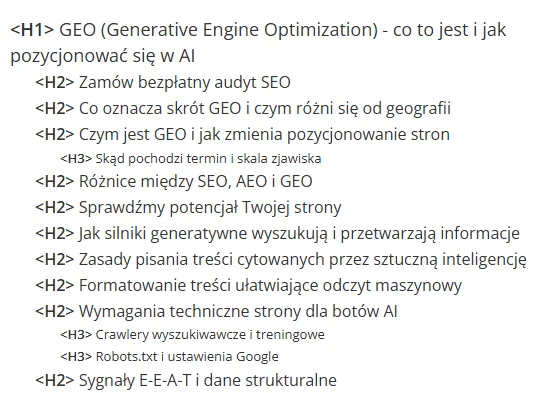
Using headings according to hierarchy is one of the simplest ways to organize page content for both readers and search bots.
- Title tag: informs search engines about the page's topic, which determines whether it appears for a specific query, so it should be 50-70 characters long (optimally up to 60 with spaces), with the primary keyword at the beginning and the brand at the end. Place the pagination page number (excluding the first page) within the first 60 characters.
- Meta description: up to 160 characters. It acts as an incentive to click, and Google may replace it with a more relevant snippet of content.
- H1: one per page, serving as the topic title with a naturally incorporated keyword phrase. Start the actual content with an H2.
- Heading structure: order from H1 to H6 without skipping levels; in paragraphs, follow the "one paragraph = one topic" rule, using bold text and bullet points for easy scanning.
- Alt attribute: describes images to crawlers and allows them to be indexed in image search.
Implementing Schema.org Structured Data in JSON-LD Format
Schema.org structured data in JSON-LD format helps Google crawlers accurately interpret entities and qualifies the page for rich snippets, such as ratings or FAQs. However, it does not guarantee that a rich snippet will be displayed. Choose the type matching the content: Article for posts, Product for product pages, LocalBusiness for local companies, Person for authors. The data must correspond to the visible page content, and you can verify its accuracy using the Rich Results Test tool.
E-E-A-T Signals and Content Author Presentation
You build E-E-A-T (Experience, Expertise, Authoritativeness, Trustworthiness) using elements visible on the page: an author bio with credentials, customer reviews, testimonials, and photos of completed projects. For topics requiring expert knowledge, sign the text with a first and last name and link it to the author's page. Strong E-E-A-T signals also improve user experience, as readers immediately see who is responsible for the content and why it is trustworthy, which genuinely supports achieving high rankings for competitive queries. Building brand visibility online begins with transparency, not technical gimmicks - just like unique content instead of copying content from suppliers or competitors.
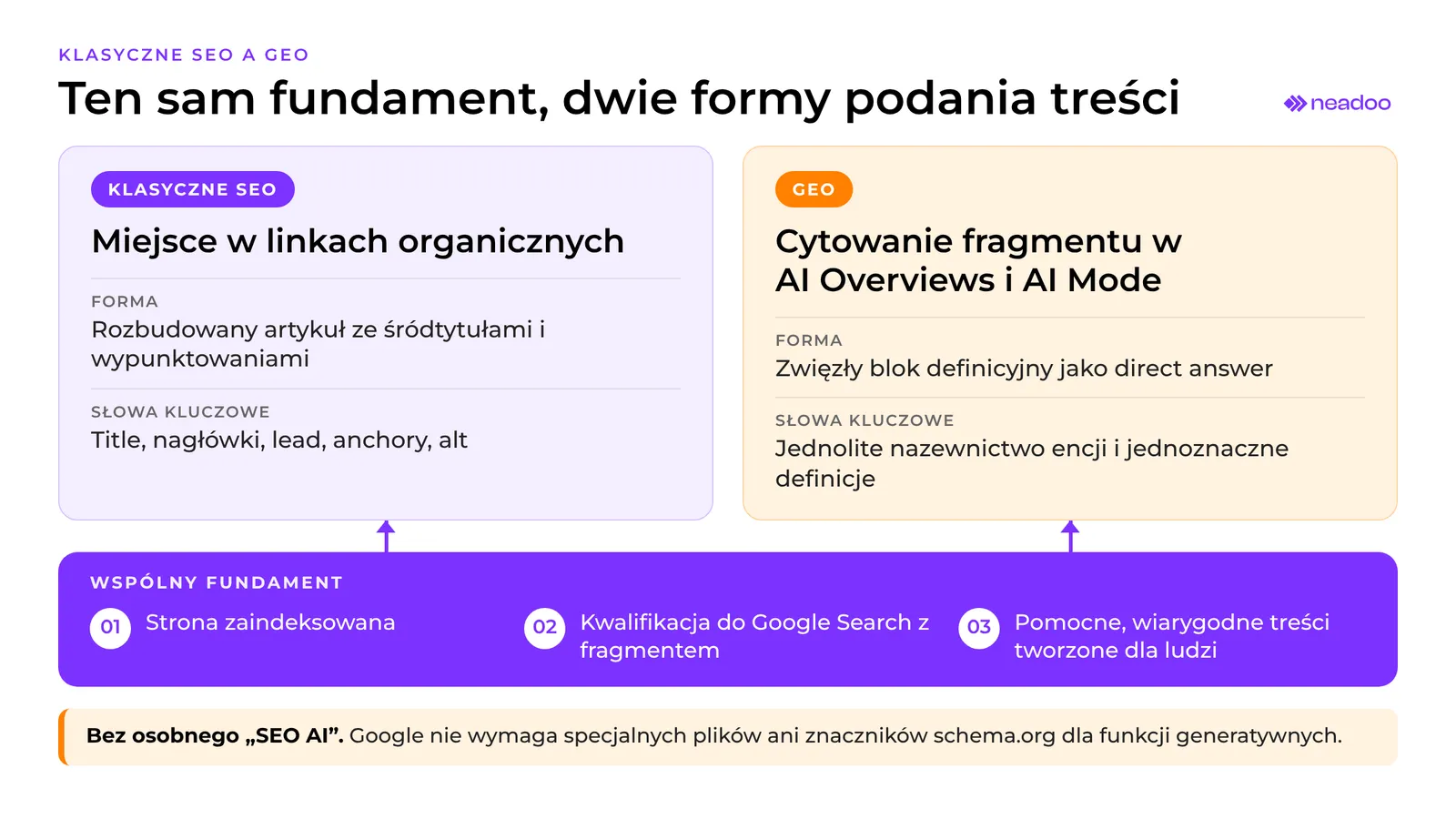
Classic Website Optimization vs. Visibility in AI Engines
Classic SEO competes for ranking positions in organic links, while GEO (Generative Engine Optimization) aims to make page snippets dense and unambiguous enough for an LLM to quote them in AI Overviews and AI Mode. The underlying technique remains the same: Google does not require a separate "AI SEO", special files, or schema.org tags for generative features. The page must be indexed and eligible to appear in Google Search with a snippet. Classic SEO and GEO are essentially two ways of looking at the same search engines, not two separate industries.
| Element | Traditional Google Bots | Generative AI Engines (GEO) |
|---|---|---|
| Entry requirement | Indexing, compliance with Search guidelines | Same, plus snippet eligibility |
| Schema.org structured data | Eligibility for rich results, no guarantee | Not required for AI Overviews, but organizes entities |
| Paragraph structure | Subheadings and bullet points make scanning easier | Concise definition block as a direct answer |
| Internal linking | Page discovery and relationships | Cohesive linking of entities and topics |
| Keywords | Title, headings, lead, anchor text, alt text | Consistent entity naming and unambiguous definitions |
In practice, this means opening every key section with a one-sentence definition or answer before providing further context. Use the exact same name for a product, service, or concept throughout the entire website, as inconsistent variants weaken entity relationships. Provide data and conclusions along with their source so the snippet can be cited without guesswork. Creating content for SEO versus GEO therefore differs mainly in how the same helpful content is presented - once as an in-depth article, and once as a concise block ready to be quoted. If you are looking for a complete roadmap, see what comprehensive search engine optimization looks like.
Inclusion in generative responses depends on non-public machine learning models, so no search engine optimization guarantees a citation. Google's guidelines and model behaviors continue to evolve, so check your visibility regularly.
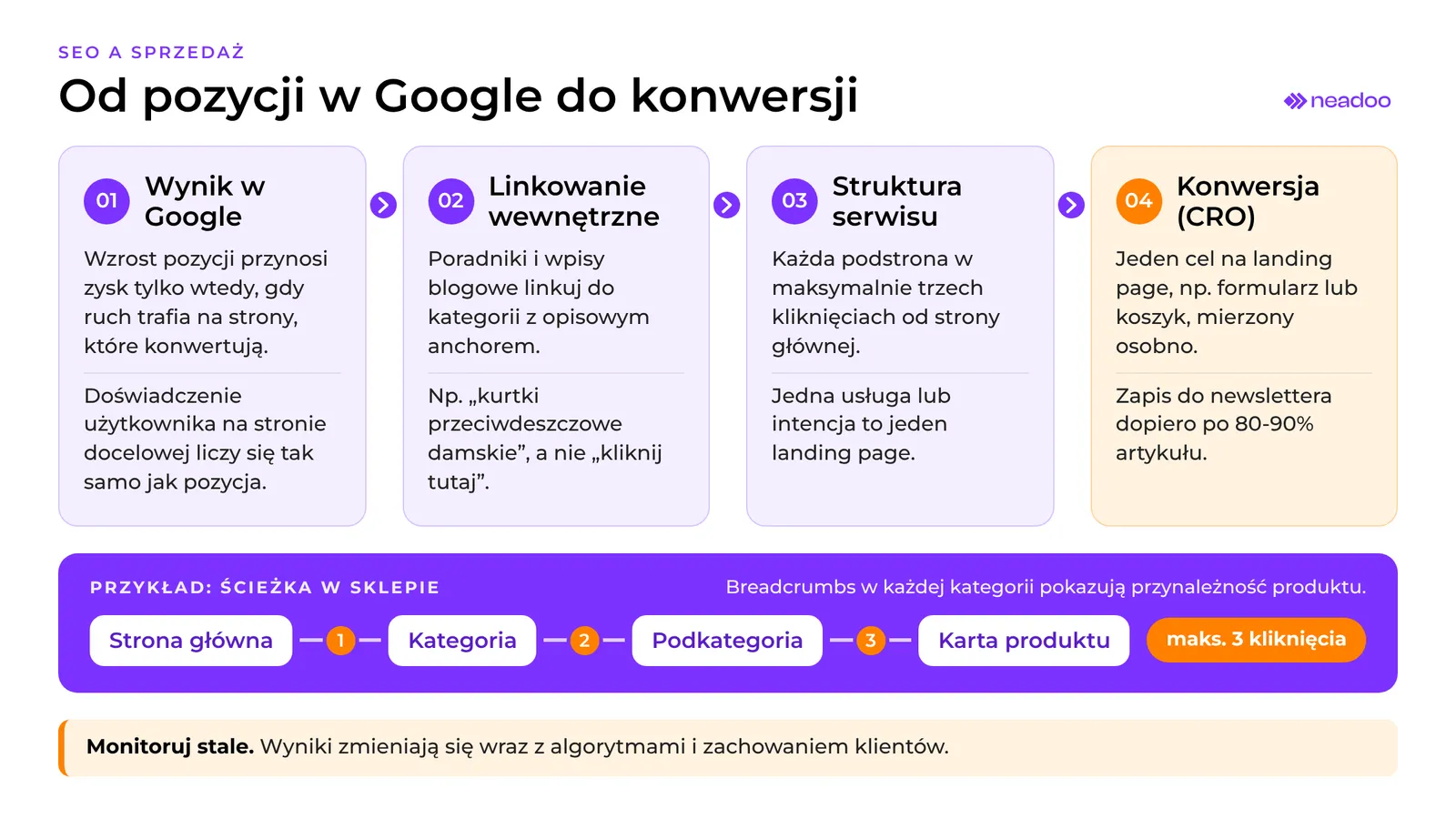
How to Translate SEO Efforts into Real Sales?
Higher rankings in search results generate revenue only when internal linking and non-intrusive UX guide traffic to pages that convert.
Internal Linking Architecture and Breadcrumbs
The site architecture should ensure access to every subpage within a maximum of three clicks from the homepage, and the menu should have no more than three levels. This makes indexing easier for search engine bots and lowers the bounce rate. Implement links as standard HTML tags with the href attribute, rather than as JavaScript buttons. Anchor text should describe the context of the target page without keyword stuffing. The more links point to a given subpage, the more important it seems to the search engine, so direct them primarily to offering pages. A well-designed site structure also shortens the purchasing path and helps Google bots discover new subpages without waiting for a full site reindexing.
Breadcrumbs show bots the hierarchy and users their location on the site. Assign one service or intent to one dedicated landing page, which prevents keyword cannibalization. When offering services that vary by city, repeat this structure separately for each location, as in local SEO.
Page Optimization in E-commerce Stores
In an online store, the path category → subcategory → product page should fit within those same three clicks. Breadcrumbs in each category show product taxonomy. Link guides and blog posts to categories using descriptive anchor text, e.g., "women's rain jackets," rather than "click here." Such internal linking channels informational traffic to where customers can actually buy. Customer reviews and social media activity further support purchasing decisions, although they are not ranking signals for Google in themselves. For details on this industry, see e-commerce SEO.
Combining SEO with Conversion Rate Optimization (CRO)
CRO (Conversion Rate Optimization) starts where SEO ends: on the page where the visitor lands. A newsletter signup pop-up should be minimally intrusive, e.g., appearing only after 80-90% of the article has been read, as interrupting reading earlier hurts UX. Set one goal for each landing page, such as a form submission or adding an item to the cart, and measure it separately. A good user experience on the landing page matters just as much as the search ranking that brought them there in the first place. Results change along with algorithms and customer behavior, which is why conversion must be monitored continuously.
The entire process, whether you call it web page optimization, website SEO, or simply working on site visibility, boils down to the same goal: increasing site visibility among real audiences. Website owners who treat site optimization as a one-off project rather than an ongoing element of their strategy usually lose what they gained after just a few months - search engine algorithms and competitor behavior never stand still. For many companies, a more effective approach than a one-time website optimization is content marketing combined with regular reviews of specific subpages, rankings in local search results, and the freshness of content on a specific page. Full website optimization that combines all these elements - from optimizing internal links to monitoring site rankings - rarely ends with a single implementation, because many websites still ignore the fundamentals that translate into results the fastest. Before assessing results on your end, check the exact same things on your site by comparing data over at least a month.
Frequently Asked Questions
What is the difference between SEO and website optimization?
Optimization refers to actions taken on the website itself: code, structure, and content (on-site factors). SEO is broader and also includes off-site factors, such as the backlink profile and domain history. In practice, both terms are often used interchangeably, and their shared goal is higher search engine visibility.
How long does effective website SEO optimization take and how much does it cost?
A ranking in Google search results is the outcome of many factors at once, which is why SEO is an ongoing, long-term process, and Google's algorithms and user behavior keep changing. Therefore, there is no single completion date or guaranteed timeframe for results. The cost depends on site size, technical condition, competition, and the scope of work - whether it involves a one-time SEO audit or a full SEO strategy run over months - which is why it is priced after a website audit.
Can you optimize a website on your own?
Yes, the basics can be implemented on your own: organizing titles, headings, and meta descriptions, improving internal linking, and preparing helpful content. The starting point is the Google Search Essentials guidelines. Technical topics are more difficult, such as indexation, structured data, or loading speed. This is where development knowledge or the support of SEO specialists comes in handy.
How do you check if a website is properly optimized for Google?
Check in Google Search Console whether key subpages are indexed and whether there are any indexing errors. Verify structured data using the Rich Results Test. Then monitor rankings, organic traffic, and conversions. A stable site ranking, the absence of sudden drops in organic search results, and the absence of technical errors, such as slow loading times or broken links, are also good signs.