
SEO Specialist - What Do They Do? How to Start a Career in SEO?
An SEO specialist is someone who handles website search engine optimization: they are responsible for making a website visible in search results and attracting traffic that converts into sales or inquiries. They do this across three areas: technical (can crawlers download and understand the page), content (does the page answer what people are searching for), and off-page (do other websites link to it).
Job postings list this role under various titles: SEO specialist, search engine optimization specialist, website optimizer. The scope is similar. How does it actually differ from "setting keywords"? Mainly in that most of the work happens before and after making changes on the site, rather than during the change itself.
Current as of: October 20, 2026. Rates and tools change every year, so we provide the source and time period alongside the figures.
What Does an SEO Specialist Do on a Daily Basis?
On a daily basis, an SEO specialist diagnoses, prioritizes, and oversees implementations. The actual changes on the site are usually made by someone else: a developer, a copywriter, or the store owner. The specialist explains what to change, why, and how to verify that it worked.
The main objective is website visibility in Google search results and growing organic traffic that drives sales. In daily work, this looks like: monitoring results in the morning (rankings, clicks, indexation), then investigating the cause of a traffic drop on a specific page, and finally setting tasks for the upcoming week. The scope of responsibilities depends on the company. However, the core of SEO is the same everywhere - technical, content, and links, tied together by a single SEO strategy.
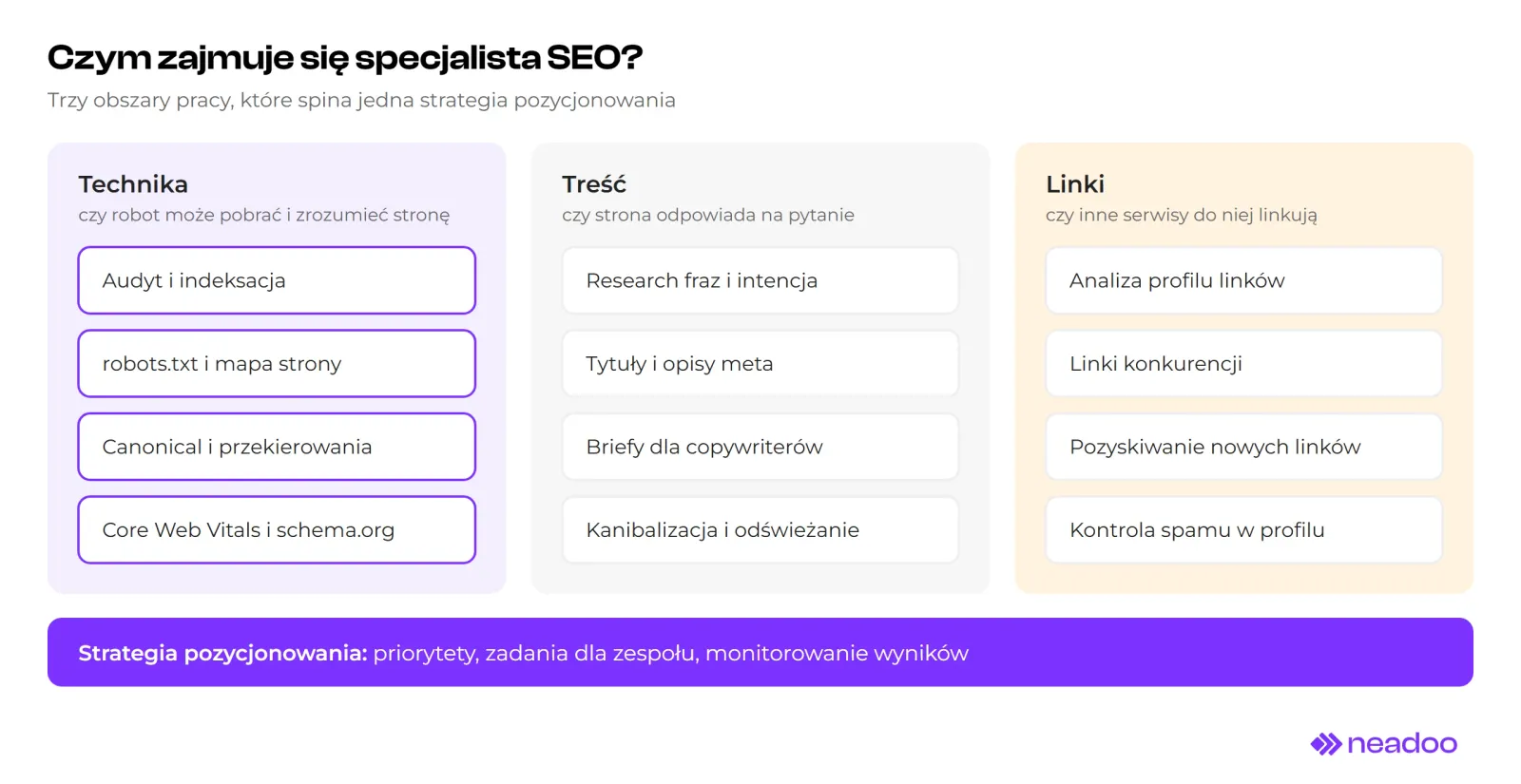
Fig. 1. Each of the three areas has separate tasks, but their priority is determined by a shared strategy.
Technical Foundations of Website Optimization
The starting point is usually an audit. The specialist checks whether crawlers have access to the right URLs: rules in the robots.txt file, the sitemap, server response codes, and canonical tags that point to the preferred version of the page to index when duplicates exist. This stage also uncovers redirect loops, orphan pages, and 404 errors in menus.
The second part is architecture: category structure, navigation menus, breadcrumbs, and internal linking. This determines which pages receive the most link equity and how the search engine understands topical relationships. On top of that come Core Web Vitals metrics (LCP, INP, CLS) and schema.org structured data.
Content and Matching Search Intent
The second area is content. The specialist selects keywords, analyzes what types of pages Google displays for a given query, and uses that to determine whether a guide, an e-commerce category, or a service page is needed. This is how working with search intent looks. Keyword density stopped being a deciding factor a long time ago. Keywords are the starting point, and content optimization comes down to answering the query better than the competition.
In practice, this means briefs for copywriters, optimizing title tags and meta descriptions, merging pages that compete for the same query (keyword cannibalization), and refreshing content that has lost traffic.
Link Building and Link Profile
The third area is off-page. The specialist analyzes who is linking to the website and to competitors, evaluates the quality of those backlinks, and plans how to acquire new ones: through sponsored articles, outreach, or link-worthy content. They also make sure the profile doesn't accumulate links from spammy sources, because poorly executed link building cannot be quickly undone. We explain this in detail in our article on link profile analysis.
What Skills Does an SEO Specialist Need?
You don't need to know how to code, but you do need to understand what the site's code does and how search crawlers see it. Without this technical knowledge, developer recommendations end up too vague to implement.
An SEO specialist's skillset breaks down into hard and soft skills. When starting out, three key hard skills are essential:
- reading HTML, basic CSS, and JavaScript well enough to tell whether content is present immediately in the source code or only after executing a script,
- managing indexation:
noindex,rel="canonical", rules inrobots.txt, 301 redirects, and HTTP status codes, - analytics: Google Search Console for visibility and indexation, Google Analytics 4 for traffic and conversions.
For data analysis, Excel or Google Sheets skills are helpful at a level that allows joining two tables and calculating metrics with a pivot table. On large websites, data exports contain tens of thousands of rows, making them impossible to decipher without these skills.
Among soft skills, the ability to interpret data is more important than the tools themselves: a drop in clicks could indicate an indexation issue, an algorithm update, or simply seasonality. Knowing how to tell these scenarios apart saves the client from unnecessary changes.
You also need to work well with people, because SEO is almost always implemented by others. Teamwork and time management skills are especially useful when multiple projects are waiting on data analyses and reports simultaneously.
What Tools Does an SEO Specialist Use?
Free Google tools are the foundation, while the rest consists of a crawler, a backlink and keyword database, and a content optimization tool.
| Category | Examples | What they are used for |
|---|---|---|
| Google tools | Google Search Console, Google Analytics 4, Keyword Planner, Looker Studio | indexing status, clicks and impressions, conversions, search volumes, reporting |
| Crawlers | Screaming Frog SEO Spider, Sitebulb | crawling a site like a bot: redirects, errors, duplicates, JavaScript rendering |
| Keyword and link databases | Ahrefs, Semrush, Majestic | rankings, backlink profile, competitor keywords, content gaps |
| Content optimization | Surfer SEO, NeuronWriter, Contadu | top 10 page analysis, terms and headings to include |
Tools deliver the most value when used together. With a paid license, Screaming Frog pulls data via API from Search Console and Google Analytics, so for every URL returning a 404 error or redirect, you can immediately see whether that page was getting traffic and clicks. This makes it easier to prioritize what to fix first. Data from GSC, GA4, and backlink tools is then combined into reports in Looker Studio.
The free version of Screaming Frog crawls up to 500 URLs per scan and does not save results. Integrations with Google and JavaScript rendering require a license (Screaming Frog FAQ).
After crawling, the Issues tab provides the most insight. Screaming Frog categorizes findings into three types: Issue, Warning, and Opportunity, assigning each a priority of High, Medium, or Low. Not everything on this list needs to be fixed right away. A missing page title or mixed content - meaning HTTP resources on an HTTPS page - are urgent issues. A title longer than 60 characters is merely a suggestion.
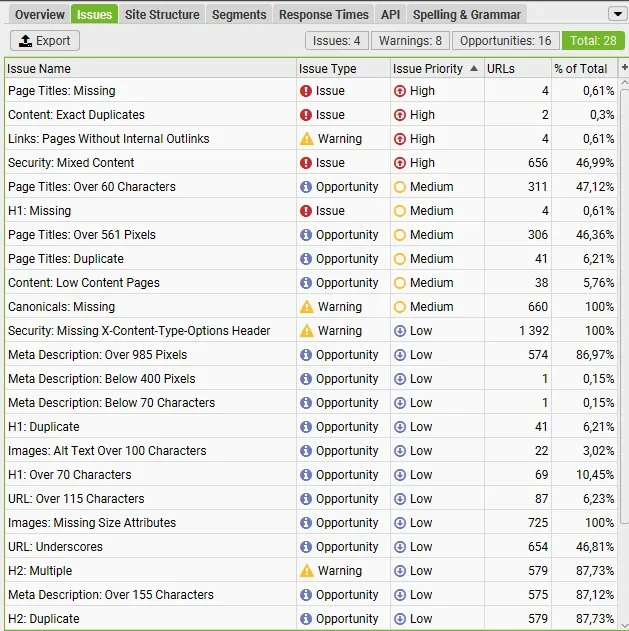
Fig. 2. The Issues tab in Screaming Frog (English interface, licensed version). The fix order starts with rows marked with High priority.
We use Ahrefs every day, and we have covered its capabilities in a separate guide to Ahrefs. To start, you do not need to pay for any premium tools. Search Console, GA4, and the free version of a crawler are enough to learn how to diagnose issues on your own website.
Let's check your website's potential
Share your website and email - we'll get back to you with a real analysis, no strings attached.
Why Is Communication Just as Important as Technical Knowledge?
A recommendation that no one implements will not change rankings. That is why a large part of an SEO specialist's work involves writing task briefs and speaking with people who have different priorities.
A developer needs a ticket that can be executed without back-and-forth questions: which URL, what needs to change, and how to verify that it works. A task in Jira or Asana with acceptance criteria, a code example, and a staging URL moves forward much faster than "fix the canonicals." The IT department rarely has time for everything at once, so it pays to prioritize tasks by impact and effort.
A client or marketing director, for whom SEO is just one of several channels alongside paid campaigns and social media, asks about something else: how much will this generate and when. Core Web Vitals mean nothing to them. You need to talk about revenue and leads, and be honest about timelines. Google itself states in its SEO Starter Guide that some changes take effect within hours, while others take several months. Anyone promising a specific deadline for results is promising something they cannot control.
English is required at a fluent reading level. Google Search Central documentation, the Search Quality Rater Guidelines, and most industry analyses are in English, and localized translations often arrive with a delay or not at all.
How to become an SEO specialist with no experience?
Your own website teaches you the fastest: you can read the theory in a few weeks, but real understanding only comes when something does not get indexed and you have to find out why. Courses and newsletters organize knowledge, while practice verifies it. Anyone who wants to become an SEO specialist will find more free materials online than they could ever read. To start a career in SEO, you do not need a specific university degree. Documentation, free courses, and your own project are enough to get started on your own.
Roadmap - what to learn and in what order?
The order matters because each step builds on the previous one. The pace depends on how much time you have, so we do not list specific weeks.
- How search engines work. Crawling, indexing, and ranking: how Google finds out about a site, when it stores it, and what determines the order of the results. The basics are covered in the article what SEO is.
- HTML and page elements important for SEO. Title, meta description, headings, links, the
altattribute, and thenrobots.txt, sitemaps, redirects, response codes, andcanonical. - Google Search Console and GA4. The Performance report, Page Indexing report, URL Inspection tool, and in GA4 organic traffic and conversions. Ideally on your own website, not on demo accounts.
- Keyword research and intent. Searching for phrases, evaluating what types of pages Google shows for them, and mapping phrases to subpages so that two pages do not compete for the same query.
- Content and on-page optimization. Improving titles and headings, internal linking, copywriting briefs.
- Technical audit with a crawler. The free version of Screaming Frog on a small site: a list of errors, followed by prioritizing their fixes. A list alone without priorities is of little use.
- Links. How to read a backlink profile, what sets a valuable link apart from spam, and why buying link packages is risky.
- Your own project and a description of the results. A website where all the previous steps have been applied, plus a brief write-up: what was changed, when, and what Search Console showed.
It is worth practicing Excel and AI tools in parallel throughout each of these steps.
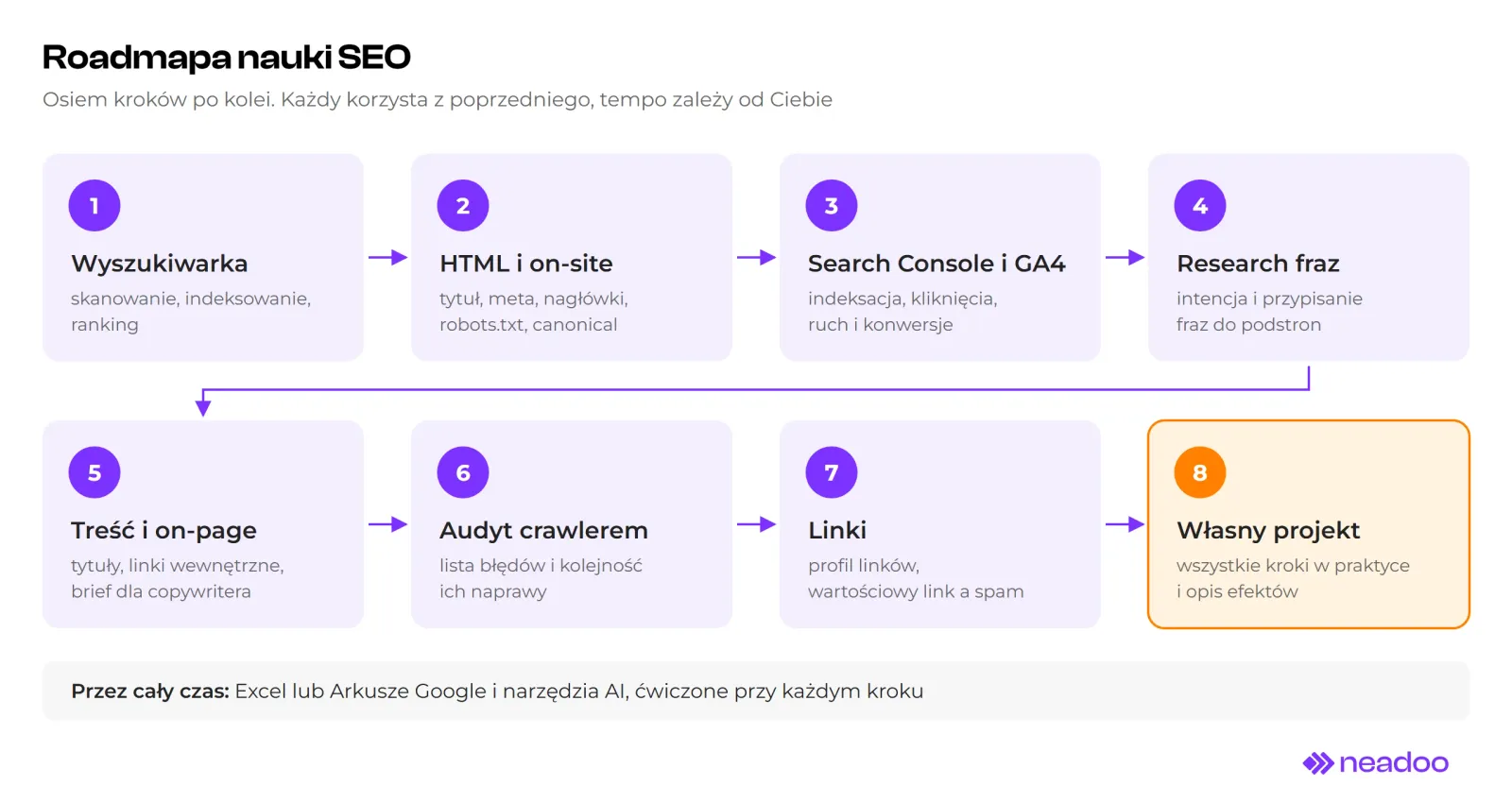
Fig. 3. The final step, your own project, brings all the previous ones together and gives you something to show in an interview.
What skills do you need to apply for a junior job?
The minimum you should bring to your first interview:
- explain in your own words how Google finds, indexes, and ranks pages,
- read a page's HTML code and identify the title, headings,
canonical, andnoindex, - find a page in Search Console that is not indexed and give a likely reason,
- do basic keyword research for a single subpage and justify your selection,
- crawl a small site with a crawler and list the three most critical issues,
- showcase your own project with results.
The rest, such as migrations, log file analysis, or managing client accounts, juniors learn on the job.
The point about unindexed pages is worth practicing with the "Page indexing" report in Search Console. Not every reason listed in that report indicates an error, as Google explains in the report's help documentation.
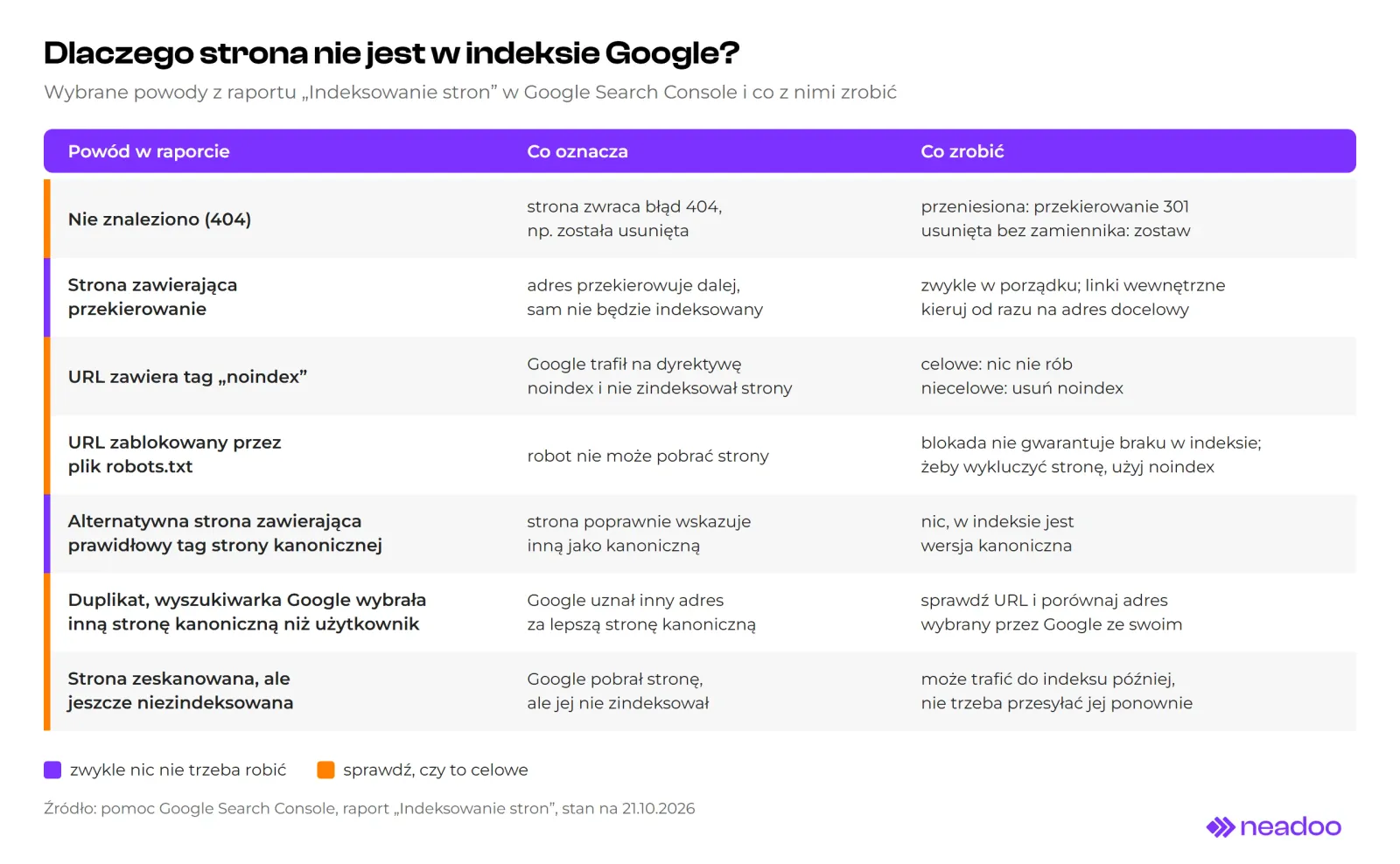
Fig. 4. A redirect or a proper canonical tag is usually intentional. With 404s, noindex, and robots.txt blocks, you need to check whether it was actually planned.
Where can you learn SEO for free?
Start with the SEO Starter Guide on Google Search Central. It is written by Google itself, so you do not have to guess how the search engine works. The Search Central blog covers algorithm updates.
You do not need a paid SEO course to get started. Google offers courses on the Skillshop platform: Fundamentals of Digital Marketing (formerly on Google Digital Garage) and a Google Analytics learning path that ends with a certification. Video courses with exams are also available on Ahrefs Academy and Semrush Academy.
Changes in Google are covered regularly by Search Engine Land and Search Engine Journal, and the most important news of the week is curated in Aleyda Solis's SEOFOMO newsletter. There are also conferences, including semKRK in Krakow and the Festiwal SEO in Katowice. Talks are great, but conferences are where it is easiest to meet the people who hire.
Add to that your own WordPress blog and an attempt to rank it for long-tail, low-competition phrases. That is the quickest path to your first CV case study.
Why should you start with your own website outside of YMYL topics?
Your own blog or a small niche site is the best proof of your skills in a job interview. It demonstrates that the candidate can set up a website, get it indexed, choose keywords, and measure the outcome.
It is better to avoid YMYL ("Your Money or Your Life") topics - those that could affect a reader's health, safety, or finances. Google's guidelines hold them to a higher standard of E-E-A-T (experience, expertise, authoritativeness, and trustworthiness), so a new website with no history and no recognized expert as the author faces an uphill battle. In a hobby niche, it is easier to find long-tail keywords where competitors have few backlinks, and to earn your first visits without a link building budget. The Keyword Difficulty metric from Ahrefs or Semrush helps filter them out. Treat it as a rough guide, though, because every tool calculates it differently. Search Console screenshots showing growing click counts along with a description of what was done are worth more to a recruiter than a list of completed courses.
What is expected of a junior SEO specialist?
A junior SEO specialist (often listed as Junior SEO Specialist or junior SEO executive) usually does not manage clients independently. They are assigned specific tasks: keyword research, metadata tweaks, checking indexation after an update, or drafting an initial audit for a senior team member to review. What matters more than the number of tools you know is whether you understand why you are doing each task, whether you ask questions when you do not know something, and whether you can describe the impact of your work.
Working as a junior SEO specialist is a great starting point because someone catches your mistakes before they ever reach the client. Someone else steers the strategy. A junior SEO specialist's job is to learn the process. Mid-level SEO specialists already run projects from audit to reporting, while a senior SEO specialist, usually with several years of experience, handles the most challenging cases: migrations, drops following algorithm updates, or large e-commerce platforms. A senior SEO specialist often trains juniors as well and takes responsibility for the overall SEO strategy for the client.
How is artificial intelligence changing the work of an SEO specialist?
Language models speed up research, keyword clustering, and first drafts, but they do not remove responsibility for what goes on the site. Google does not ban AI-assisted content, but in its guidelines it notes that mass-producing pages without user value can violate spam policies, and it recommends reviewing any such content before publication. That review remains the specialist's job: facts, search intent, technical audits.
From our hands-on experience with AI tools: they are great at clustering keywords and writing the first draft of a brief, but worse with numbers. That is why we verify every single number in articles on this blog against the original source, and we treat model hallucinations as a real risk.
The playing field itself is changing too. AI answers in Google, ChatGPT, and Perplexity cite selected sources - including forums and social media posts - so SEO specialists increasingly check not only page rankings, but also whether the brand shows up in those AI answers. Anyone who enjoys working with new technologies will find plenty to learn here. This field is covered by AI search engine optimization, which relies on the very same fundamentals: a technically accessible site, substantive content, and trustworthy sources. You can read more about this in our articles on AI Overviews and AI agents in SEO.
Where does an SEO specialist work: agency, in-house, or freelance?
Your workplace shapes what and how quickly you learn. In an agency, you will see dozens of websites; in-house, you will get to know a single one inside out; as a freelancer, you are responsible for everything on your own.
| Work model | Typical environment | Advantages | Challenges |
|---|---|---|---|
| SEO agency or marketing agency work | Several to a dozen clients at a time | Diverse industries and platforms (WordPress, Magento, Shopify), rapid exposure to various problems | Hourly budgets, reporting, multiple competing priorities |
| In-house team (e-commerce, media) | One large website | In-depth knowledge of the site, constant contact with developers and the product owner | Longer approval process for changes, less variety |
| Software house | Websites and apps built from scratch | Influence on structure before launch, pre-implementation audits | Short projects, rarely seeing long-term results months later |
| Freelancer | Small and midsize businesses, subcontracting for agencies | Independent decision-making, setting your own rates | Client acquisition, tool costs, bookkeeping |
Can an SEO specialist work remotely?
Yes, it is one of the easiest marketing roles to do remotely: tools run in the browser, and tasks for developers go into a ticketing system anyway. Job boards allow you to filter SEO listings by remote and hybrid work. For your first job, however, it is worth considering an office or hybrid setup, as it is much easier for a junior to learn when there is someone nearby to ask.
What are the benefits of starting at an agency?
For beginners, an agency offers the greatest variety. In a short period, an agency junior encounters an e-commerce store, a local business, and a service website, each with completely different issues. You simply cannot learn website optimization across diverse industries on a single domain. You learn alongside someone who reviews your audits and recommendations before they ever reach the client.
The most valuable experience comes from working on site migrations and redesigns: building a 301 redirect map, monitoring indexing after launch, and analyzing server logs. That is hard to practice on your personal blog, but happens regularly at an agency.
What are the career paths in SEO?
In the SEO specialist profession, progression usually runs from junior to mid-level specialist, then to senior, and onward to team lead or head of SEO. Along the way, specialists often choose one of three directions:
- Technical SEO - indexing large sites, JavaScript rendering, migrations, server logs, structured data.
- Content SEO - content strategy, search intent, topic architecture, collaborating with the editorial team.
- SEO Project Manager - project management, handling clients and teams, aligning strategy with developer schedules.
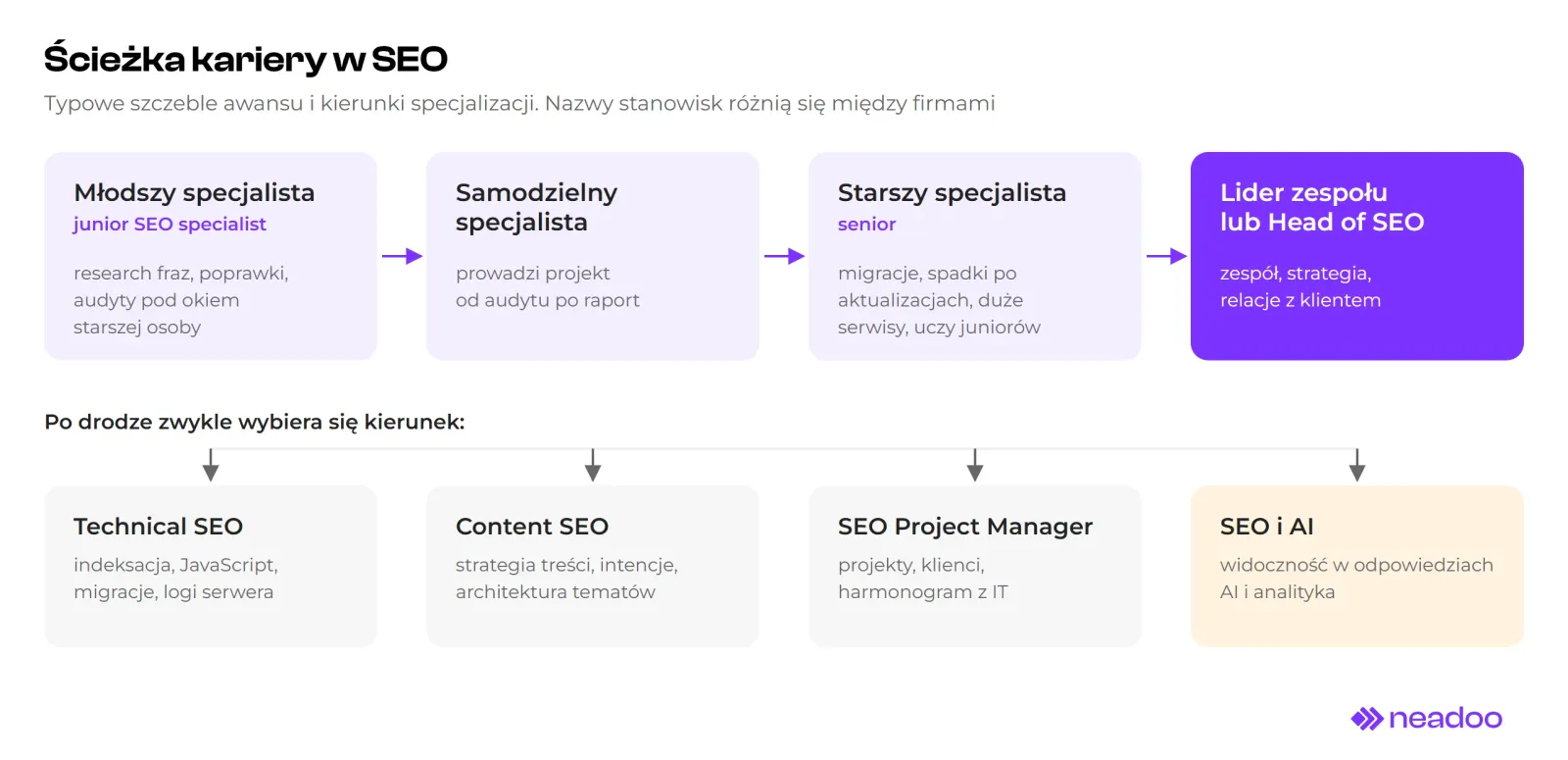
Fig. 5. A typical career ladder. In small companies, a junior might work independently right away, while large organizations add intermediate levels.
A fourth path is also emerging: combining SEO with visibility in AI-generated answers and online marketing analytics.
How much does an SEO specialist make in Poland?
How much an SEO specialist earns depends on seniority, city, and contract type. We do not provide specific numbers because we have not found a publicly available study with solid methodology that we could cite on a company blog. Salary ranges in online guides usually lack clear sources or sample sizes. At the very same seniority level, they can vary by thousands of zlotys.
How can you check market rates?
The simplest way is through job postings. Portals like Pracuj.pl, NoFluffJobs, and Just Join IT display salaries in many listings for SEO specialist and search optimization roles. Reviewing a dozen listings for the same seniority level, city, and contract type will tell you far more than a single average.
A second source is the National Salary Survey by Sedlak & Sedlak. It provides median earnings for SEO specialists, broken down into junior, mid-level, and senior roles. However, it lumps SEO and SEM roles together and covers only standard employment contracts (umowa o pracę).
For B2B contracts and leadership roles such as SEO Lead or Head of SEO, we have not found methodologically sound data. In those cases, the best approach is talking to industry peers, for instance at conferences.
What drives higher pay? Seniority, city, company size, and contract type, but also specialization: technical SEO on large-scale sites and migrations involves an entirely different level of responsibility than optimizing blog posts. When switching jobs, what carries the most weight is whether a candidate has independently carried out an audit or migration and can showcase the tangible results.
Frequently Asked Questions About Working as an SEO Specialist
1. Does an SEO specialist need to know how to code?
No. It is enough to understand HTML, basic CSS, and JavaScript well enough to read page source code, assess whether content is accessible to web crawlers, and implement or commission canonical tags, robots.txt rules, or structured data. Larger changes are implemented by developers based on SEO guidelines.
2. How long does it take to learn SEO to land your first job?
We are not aware of any study measuring this, and we will not pull a number out of thin air. It depends on how much time someone devotes to studying and whether they practice on their own website from the start. Anyone wanting to become an SEO specialist should have something to show during an interview: a website they indexed, keywords they ranked for, and an explanation of what worked and what did not.
3. Is learning SEO difficult?
The fundamentals are not difficult, but SEO requires patience because the impact of changes appears with a delay, and it is not always obvious which change caused it. What is often harder than the theory of search engine optimization is connecting technical aspects with an understanding of the client's business and monitoring whether changes actually work.
4. Which SEO certifications are valued by employers?
In SEO, there is no single certificate that opens doors. It is worth adding a Google Analytics certificate from Skillshop, as well as certificates from Ahrefs Academy and Semrush Academy, to your resume. They show that a candidate knows the tools, but they cannot replace a personal project with actual results from Search Console.
5. Does SEO have a future in the age of AI?
Yes, but the scope of work is shifting. AI search engines and AI answers in Google rely on the very same websites an SEO specialist optimizes, so the fundamentals (technical accessibility, content that answers the query, authoritative sources) remain. What is new is measuring visibility within AI-generated answers, which we discuss in our article on AEO.
Sources
- Google Search Central, SEO Starter Guide
- Google Search Console Help, Page Indexing report
- Google Search Central, Google Search's guidance on using generative AI content
- Google, Search Quality Rater Guidelines, September 11, 2025 version
- web.dev, Web Vitals
- Screaming Frog, SEO Spider FAQ
- Google Skillshop, Ahrefs Academy, Semrush Academy