
Internal Linking - What Is It? How to Boost SEO with It?
Every website has some kind of content. This content is usually thematic - it relates to a specific topic or category. Our goal, of course, is to keep the user engaged with the subject that interests them for as long as possible. For this purpose, it is worth using internal linking. Such a practice will help us improve conversion rates and enhance user interaction with the site, as well as potentially lower the bounce rate.
Internal links on websites - what are they?
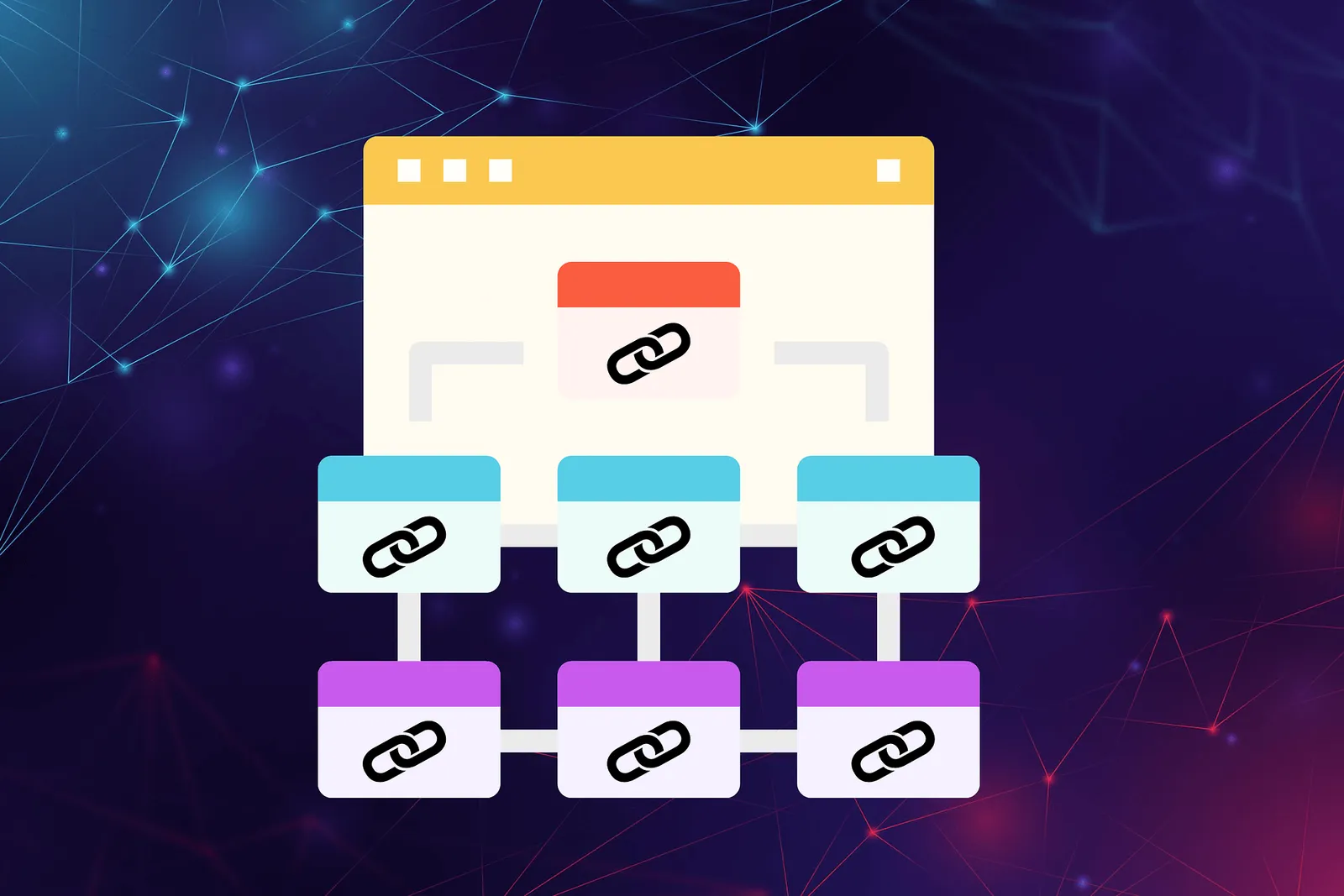
When reading an article online, it is easy to come across phrases that are highlighted and act as links to another subpage. These are precisely internal links. They are often marked with color and easy to spot. These are known as anchors, or direct internal links within the content. This happens because the content creator likely wants us to follow that link and delve deeper into the topic. It might be a reference to another article expanding on a point made in that paragraph, or a product whose application is discussed in the article. Internal linking can serve various purposes, but the most important are conversion and reducing the bounce rate. Besides in-content links, it is also worth explaining other applications of links, as there are different types of internal links. A well-planned structure of the main menu in the site header, as well as the elements in the footer, is simultaneously a well-planned internal linking structure. Main menu and footer elements are available site-wide, so we can reach a subpage linked within them from anywhere in the site structure. This is also a crucial aspect regarding the indexing of our site. Navigation is a very important element in terms of UX - for example, a link to the homepage within the menu allows us to reach it from anywhere on the site. Therefore, it is good practice to carefully consider the placement of site-wide links. A third, equally important method of internal linking is breadcrumb navigation. This is a type of internal navigation that helps users browse our website and provides easy access to the category hierarchy. It is usually placed at the top of the page or below the main menu, displaying the path of pages visited by the user.
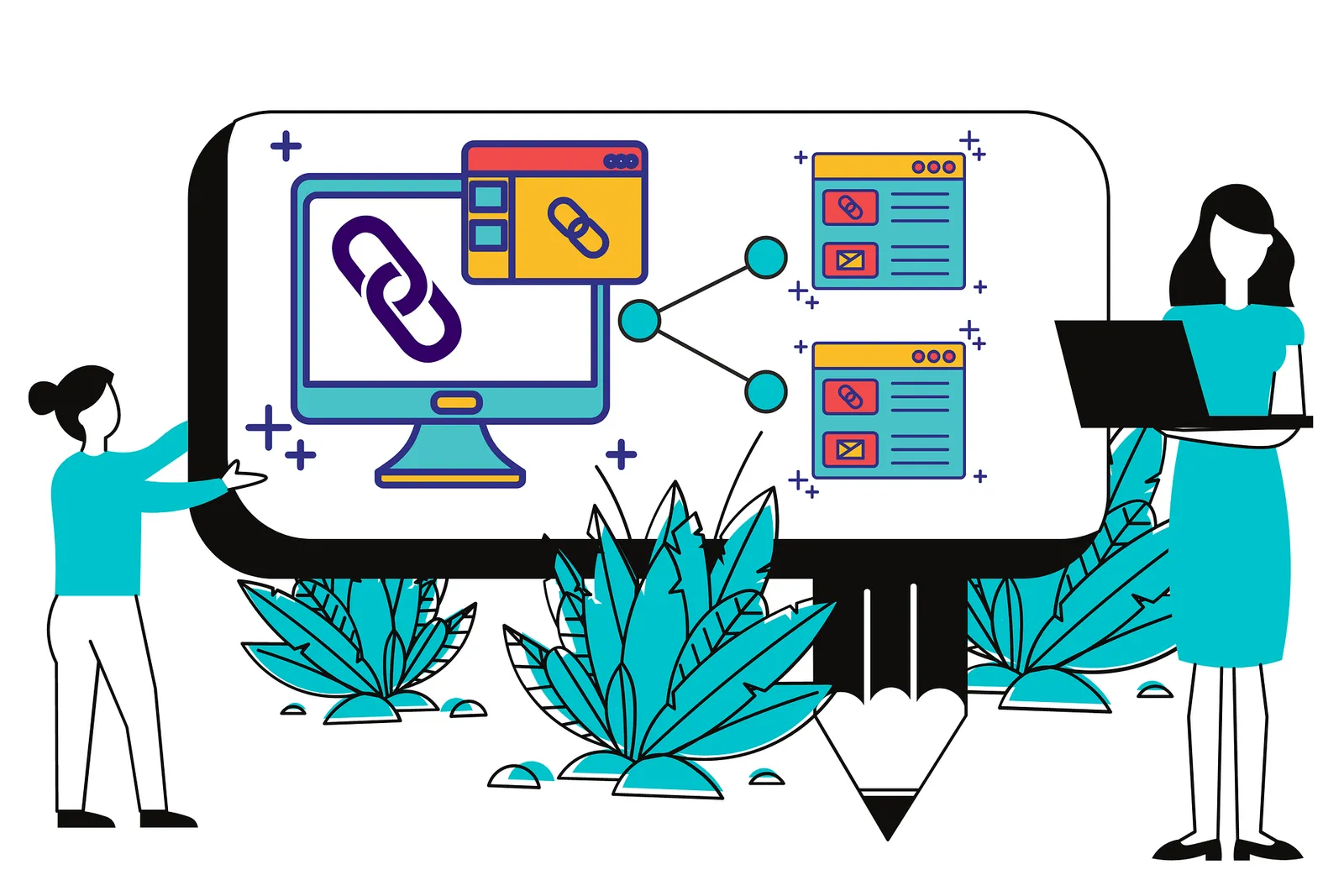
Using such a menu can bring many benefits for internal linking, including:
- Facilitates internal navigation
- Increases time spent on the page
- Improves site crawlability and indexability
- Improves UX
- Helps increase conversions
Improving user experience through internal linking
As you can see, internal links significantly improve website navigation. This directly affects the user experience of our site. However, there is another way to use this element to achieve better UX. It is worth using CTA (Call To Action) elements for this purpose. These can be, for example, buttons that are highlighted in the content or at the end of an article, designed to prompt the user to take action - in this case, to visit the subpage linked under that element. For us, this is also an internal link that carries the same benefits mentioned earlier in the article, while for the user, it is a visually engaging element that can encourage them to perform a specific action on the website.
How can internal links improve website ranking in Google search results?
First and foremost, by facilitating indexing. Good navigation makes it easier to reach web pages and prevents situations where a subpage has no links pointing to it (known as orphan pages). It is worth checking whether a given subpage is accessible within the site's navigation, as a lack of linking can undermine our chances of achieving good SEO results. Search engine crawlers can also more easily understand which pages are important in relation to the hierarchy, such as product categories. It is also good to provide access to important subpages directly from the homepage. Improving navigation can also contribute to a better user experience. As a result, users may spend more time on the site, which leads to a lower bounce rate and a higher conversion rate. Internal linking therefore plays a key role in website navigation. All of this can translate into higher rankings for keywords important for promoting your brand and increases the value of individual subpages. Solid internal linking within topics related to a specific group of keywords (a so-called cluster) allows for the creation of a strong network of connections between these phrases, which can ultimately translate into high rankings. Such an approach demonstrates that we are an expert in a given field and that our internal links do not lead to arbitrary places on the site, but to those strictly relevant to the given topic.
What else is worth keeping in mind?
Excessive number of internal links
It is best practice to avoid an excessive number of internal links to a single subpage. If you have already linked to a specific subpage within one article, there is no point in returning to it repeatedly. An excessive number of internal links can be perceived as spam by the user. This also applies to the overall number of links. Linking too frequently within the content can be bad for Google crawlers. It is important to exercise moderation here to make it easier for the Google search engine to analyze them. Google algorithms only consider the first occurrence of a link. Subsequent links placed in the content pointing to the same subpage will not be taken into account. It is therefore worth guiding the user to other subpages as well.
Anchors
In internal linking it is important to think through your anchor text. It is important that the anchor is descriptive and helps the user understand where the link leads. It should therefore be a precise description that clearly indicates what will be found under the given link. A good practice when adding internal links to other subpages is to avoid overly generic anchors, as they waste the SEO potential of our content.
Topical Relevance
Internal linking should lead to pages that are topically related to each other. Directing a user to something completely different from the topic of the website content they are currently viewing can be confusing, cause a poor user experience, and make it difficult for search engine crawlers to analyze our site. It is therefore a good idea to plan appropriate keyword clusters within the site structure.
Broken URLs
It is good to stay vigilant when creating links. A small typo can make a link point to a non-existent subpage or contain a redirect. This can mislead users. Search engine crawlers can also be confused. That is why adding internal links should be carried out carefully.
Let's check your website's potential
Share your website and email - we'll get back to you with a real analysis, no strings attached.
How to Check Internal Linking?
When we are just planning the launch of our website and it is not yet publicly available, we can plan proper internal linking in advance. But what if we already have a website online and want to check the state of internal linking? It is best to check the indexing status in Google Search Console. First, we can verify the number of indexed subpages, which will allow us to assess the effectiveness of internal links in this regard. On the other hand, the report will show us errors related to internal linking, such as 301 internal redirects resulting from changed subpage URLs, or mistyped URLs. To check internal linking, we can also use popular crawlers such as Screaming Frog or Sitebulb. The former has a free version. It is limited to checking 500 URLs - this should be entirely enough to check the basic structure of the site. The tool allows us to check which page contains the link, where within the given subpage it appears, whether it is a text link, or if it comes from an image, etc. We can also easily generate a report of such links and quickly find errors.
Summary
As you can see, internal linking is a process that can bring us many benefits. It is just as important as external links. It is therefore worth ensuring careful planning of links to make it easier for Google bots to understand the website structure and its topics. Longer time spent on site, lower bounce rate, higher rankings - these are just a few of the many positive outcomes that will reward your work in improving your site. If, however, you lack the time or worry you might not handle this process on your own - contact us. Search engine optimization is our passion. We will gladly help you both with this process and with many other issues.