
Case Study - Building Local Market Traffic for a Medical Industry Client
In recent years, local SEO has become a key aspect of marketing strategies for companies and enterprises, regardless of their size and industry. This strategy can decisively impact a company's success, especially when it comes to acquiring customers in a specific location. In the medical industry, where competition is particularly intense, properly executed local SEO is not only beneficial, but practically essential if we want to succeed in organic search results. In this article, we will take a look at the case of a client from the medical industry who achieved significant success thanks to effective local SEO. We will talk about the strategy we implemented, as well as the benefits this strategy ultimately brought them. This is a great example of how the skillful use of local SEO can bring benefits to companies operating in specific locations by increasing their visibility, attracting more customers, and consequently contributing to their overall success.
Planning the Strategy
Taking into account the specifics of the medical industry and the competition in the local market in Poznan, the first step was to understand user intent - that is, what they are looking for when entering specific keyphrases into a search engine. Matching content to user intent is a key element of effective SEO, because we need to know whether our site already has the right subpages tailored to them, or if we need to plan them from scratch.

Keyword analysis and understanding the context in which terms are used allowed us to create a precisely targeted SEO strategy. Our efforts included optimizing existing subpages, but an equally important element was building new, dedicated landing pages. The new subpages were created specifically for carefully selected keyphrases. This is an important element of the strategy, because our content on a given subpage should be the best possible answer to the user's query. Each landing page was carefully designed, using appropriate keywords, meta descriptions, page titles, and headings to make it as appealing as possible to search engine algorithms. In addition, we made sure the content was not only SEO-friendly, but above all user-friendly - easy to read, helpful, and engaging. In the medical industry, this is particularly important due to YMYL.
Keeping YMYL in Mind
This is an acronym that stands for "Your Money or Your Life" in SEO. It is a term used by Google to describe websites or content that can directly impact a user's "money" or "life." YMYL pages cover a wide range of content that can affect users' finances, health, safety, happiness, and overall lifestyle. For example, sites related to banking, investing, health and medicine, law and government, and news are often classified as YMYL because they have the potential to influence users' financial and life decisions. In SEO, YMYL pages must meet very high standards, because inaccurate or misleading information on these pages can have serious consequences for users. Google requires them to demonstrate a high level of E-E-A-T, which stands for Experience, Expertise, Authoritativeness, and Trustworthiness. In practice, this means that content on YMYL pages should be created by experts in a given field, the website should be an authoritative source of information, and the entire site along with its creators should be trustworthy. All of this contributes to Google's assessment of page quality and directly affects its rankings in search results. With content prepared in this way, we could proceed to the next steps of our strategy: building the appropriate landing pages and planning the link profile development.
Technical Analysis and Content Implementation
Every content deployment should be preceded by a technical site audit. After all, we want search engine crawlers to easily analyze our optimized content. Therefore, it is essential that they do not run into issues while visiting our site - we want our changes to be evaluated as highly as possible and indexed as quickly as possible.
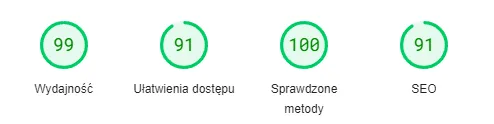
We conducted the technical audit using the Screaming Frog tool. It is a crawler that scans the website much like Google bots do and lists the data it finds about the site. In addition, we use tools such as PageSpeed Insights, Siteliner, GTMetrix, Pingdom Tools, Structured Data Testing Tool, and many others. During the analysis, we checked things such as:
- Crawlability for search engine bots: Search engines use bots that crawl websites and index their content. The robots.txt file on a site informs these bots which pages they can crawl and which they cannot. It is important to ensure that the robots.txt file is configured correctly and does not block access to important pages.
- Page load speed: Google and other search engines favor pages that load quickly because page speed affects user experience. Tools like Google PageSpeed Insights can help identify issues that might be slowing down the site.
- Mobile optimization: More and more people browse the internet on mobile devices, which is why Google and other search engines prioritize mobile-optimized websites. An audit should include verifying whether the site is properly responsive across different devices.
- URL structure: Clean and well-organized URLs can help search engines understand what a page is about. UR
After fixing the technical issues, we prepared the subpages so that the published content looked engaging to read, and rich in CTA elements to improve user experience and encourage conversions. We also built new pricing tables so users could easily access specific information about service costs.
Let's check your website's potential
Share your website and email - we'll get back to you with a real analysis, no strings attached.
Link profile building
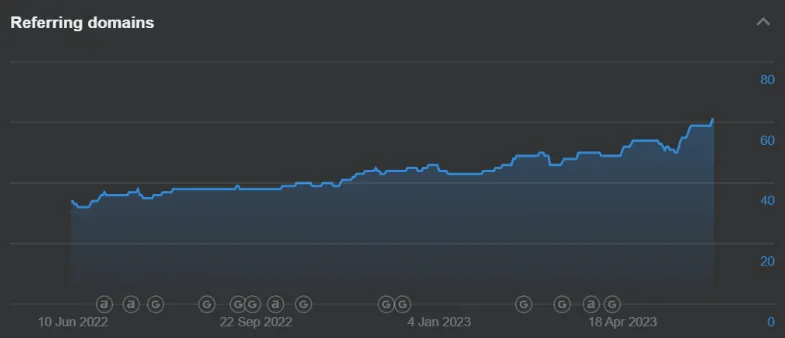
A website's link profile - the collection of all links pointing to it from other websites - is one of the key factors influencing its position in search results. There are several reasons why building a link profile is so important:
- Strengthens site authority
- Increases site visibility
- Helps with site indexing
- Impacts search engine rankings
- Builds relationships with other websites
However, it is worth remembering that not all links are equally valuable. High-quality links from trustworthy, authoritative sites that are relevant to your site's topic are far stronger than links from low-trust sites or thematically unrelated pages. When building a link profile, it is crucial to focus on quality, not just the quantity of links. Therefore, we acquired high-quality links on websites thematically related to the medical industry to further strengthen our client's authority as an expert. Links were acquired naturally so that profile building would not be too aggressive.
Location connection
In addition to building subpages targeted at location-based keywords, it is also worth planning specific actions that will help establish visibility in a given area. The first such action is setting up a Google Business Profile. Having an up-to-date and optimized Google My Business profile is a key element of any local SEO strategy. It not only helps increase your company's visibility in search results, but also makes it easier for potential clients to find and contact your business. Other important advantages of having a listing include:
- Location details: A Google My Business listing allows businesses to provide detailed information about their location, such as address, operating hours, and phone number. This makes it easier for potential clients to find and get in touch with your business.
- Reviews and ratings: Customers can leave reviews and ratings on your Google My Business profile, which serves as a valuable source of information for both prospective clients and search engines. Businesses with good reviews can improve their rankings.
- Google Maps integration: Google My Business profiles are tightly integrated with Google Maps, meaning your business will be visible to people using this service to find local companies.
After setting up the Google Business Profile, it is worth implementing LocalBusiness structured data. Structured data, also known as Schema.org, is a key tool for local SEO. These are special tags added to the page's HTML code to help search engines understand what information the page contains. The LocalBusiness tag is a specific type of structured data that allows companies to share detailed information about their business, such as name, address, business hours, business type, and much more. We used this data to provide basic address and contact details to tie the business to the local area even more effectively.
Campaign results
This strategy was maintained through regular monitoring of results and implementing necessary adjustments. The impact of every targeted keyword was tracked, and landing pages were updated as needed to ensure the SEO strategy continued to deliver the expected results. As a result, these decisive and well-thought-out actions led to our client's success in local SEO, increasing their online visibility, attracting more potential clients, and contributing to the overall growth of their business. Estimated monthly traffic grew from around 850 users to approximately 1,500 users per month over the course of two years.

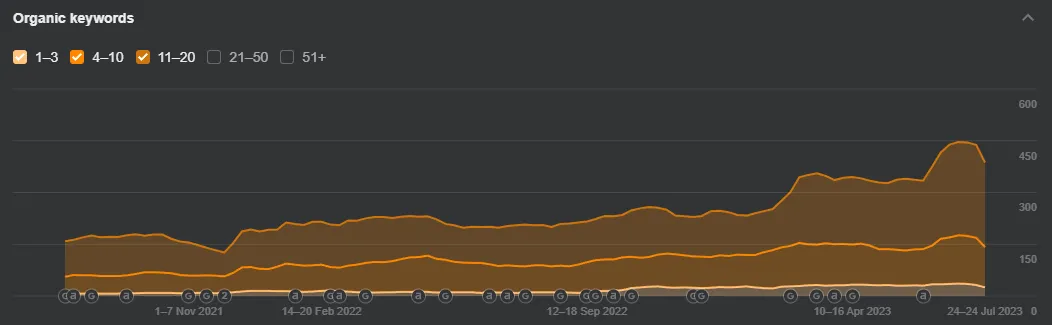
Changes that took place over the course of two years:Keywords for which the client ranks in positions 1-3 - an increase from 7 to 35 keywords.Keywords for which the client ranks in positions 4-10 - an increase from 49 to 117 keywords.Keywords for which the client ranks in positions 11-20 - an increase from 103 to 245 keywords.
Summary
In conclusion, an effective local SEO campaign is not only a matter of proper content planning and keyword selection, but also taking care of the technical aspects of the website. A technical SEO audit allows you to identify and fix factors that can impact site performance in search results, such as loading speed, mobile optimization, URL structure, and website security.Equally important is building a strong backlink profile, which helps increase website authority, improves visibility, and assists with indexing by search engines. Links to your site from other reputable websites are treated by search engines as votes of confidence, which boosts your rankings in search results.Remember that SEO is a long-term process and requires continuous monitoring and optimization. However, with the right approach, even a small local medical practice can compete with large corporations and attract more patients through search engines.If you want to learn more about how to effectively run a local SEO campaign for your medical practice, or if you need help conducting a technical SEO audit or building a backlink profile, contact us. Our team of SEO specialists is ready to help you increase your business's online visibility and attract more potential clients.